Beautiful flower still needs a label.
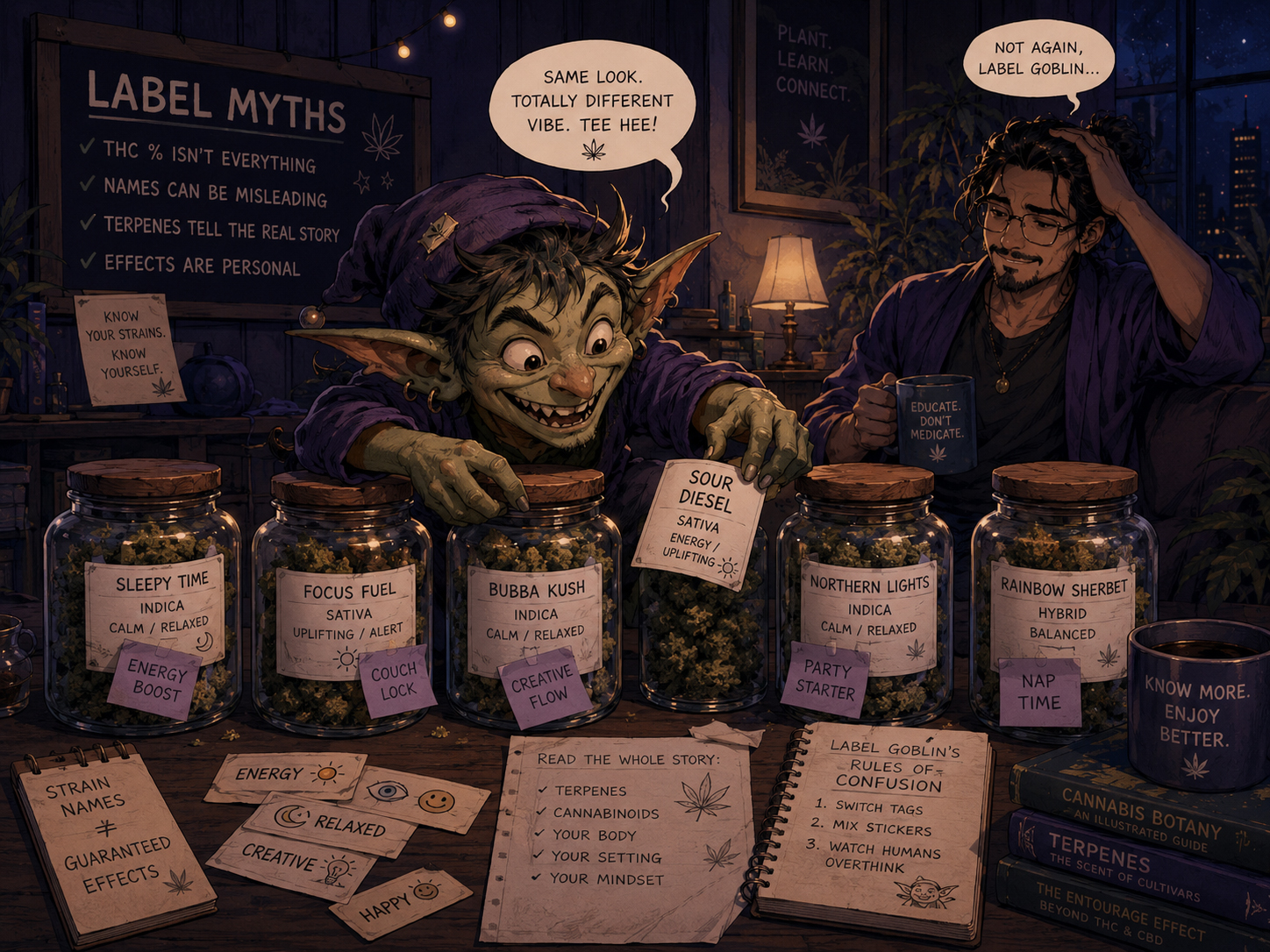
A frosty bud, purple flecks, orange pistils, and a dramatic strain name can all influence expectation. They still do not replace reading the product details.
What is cannabis flower?
Cannabis flower is the harvested and cured flowering portion of the cannabis plant, commonly sold as bud. When a product is labeled “indica flower,” the seller is placing that flower into an indica-leaning market category.
That category may suggest a certain cultural vibe, but the label should still provide the practical details: cannabinoids, terpenes, batch data, testing information, warning language, and sometimes harvest or package dates.
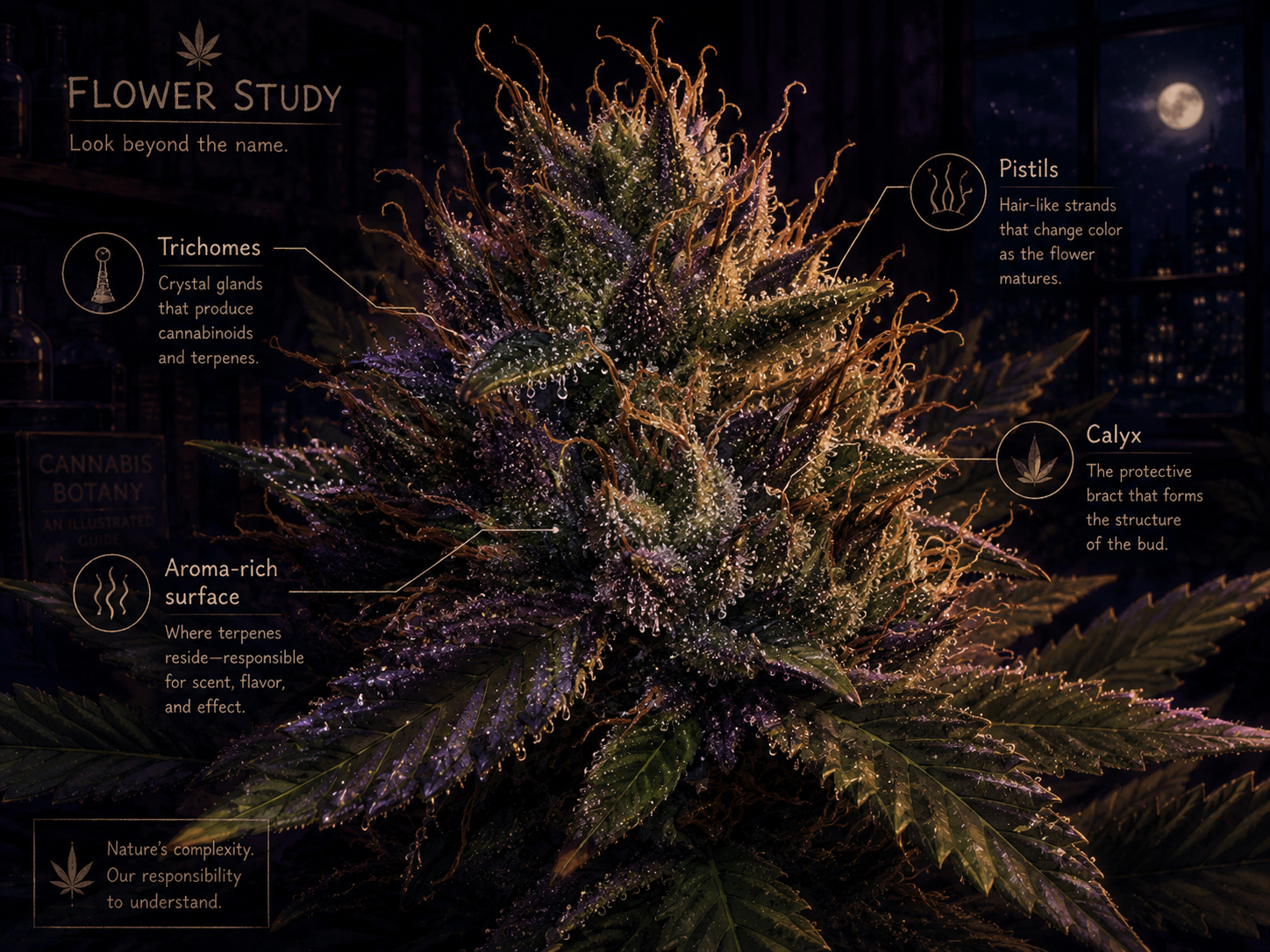
Basic flower anatomy
You do not need to become a botanist to read a cannabis label better. But a few visual terms help explain why the flower image is more than decoration.
Tiny resin glands often discussed because they relate to cannabinoids and terpenes.
Hair-like structures that can appear orange, amber, red, or brown as the flower matures.
Small structures that form much of the bud’s visible shape and density.
Small leafy material around the flower, often dusted with visible resin.
What appearance can and cannot tell you
Appearance can be interesting. Dense structure, frosty resin, pistil color, trim quality, and moisture feel can all become part of the observation. But looks cannot tell the whole story.
Appearance can suggest
- General freshness or dryness cues.
- Visible trichome coverage.
- Trim and handling quality.
- Color and cultivar presentation.
Appearance cannot prove
- How every person will feel.
- Whether the product is “better.”
- The full cannabinoid profile.
- The full terpene profile.
Aroma is a clue, not a guarantee
Indica flower descriptions often use words such as earthy, musky, floral, spicy, woody, herbal, resinous, grape-like, or berry-like. These aroma notes can be useful for comparison.
But aroma language is not a promise of relaxation, sleep, comfort, or medical benefit. Treat aroma as sensory information, not a prediction engine.
Smell can guide curiosity. The label guides better decisions.
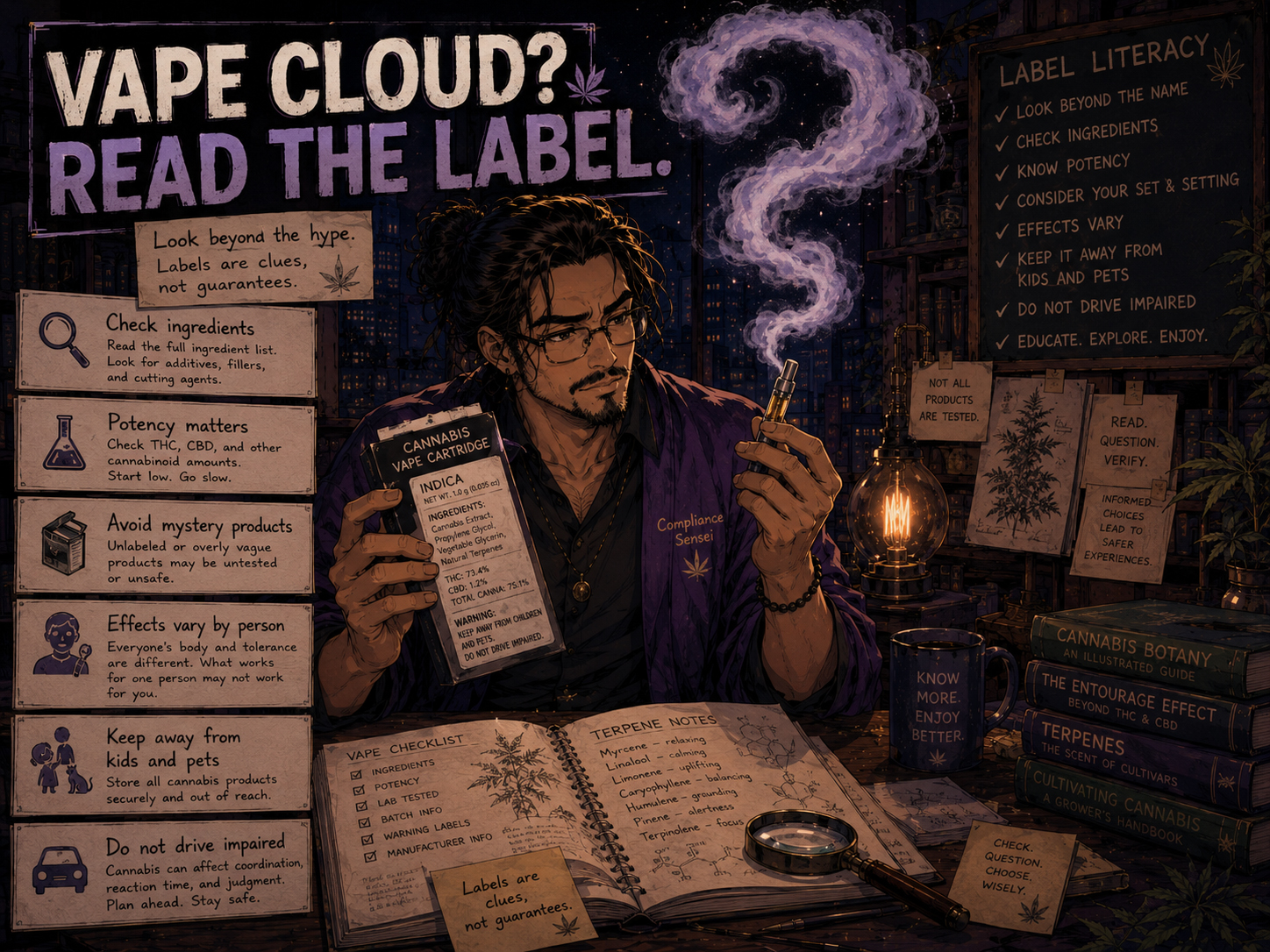
What to read on an indica flower label
Flower labels vary, but these are the details worth looking for before you let the strain name take over the story.
| Label clue | What to ask |
|---|---|
| Strain / cultivar name | Is this just a familiar nickname, or does the label give enough supporting detail? |
| Category | Is it labeled indica, sativa, hybrid, or something more specific? |
| THC / CBD | What is the cannabinoid profile, and is it appropriate for your own tolerance and plans? |
| Terpenes | Does the label list myrcene, linalool, caryophyllene, humulene, limonene, or other compounds? |
| Batch / test date | Is there traceability, testing, or package date information? |
| Warnings | What does the label say about adult-use, impairment, storage, and local rules? |
Flower label mindset:

Name: interesting
Category: useful clue
THC/CBD: important context
Terpenes: aroma profile
Batch/test date: traceability
Warnings: not optional

Conclusion: read the whole thing.
Indica flower myths
Flower myths often start from something visible or memorable, then overreach.
Myth: Purple means stronger
Color can be part of cultivar expression or presentation, but it does not automatically prove potency, quality, or effect.
Myth: Frosty means predictable
Trichome coverage can be visually notable, but personal effect still depends on many factors.
Myth: Dense means indica
Structure may be part of the plant story, but retail labels and chemistry still need verification.
Myth: Smell equals effect
Aroma can be a clue, but it is not a universal effect guarantee or medical claim.
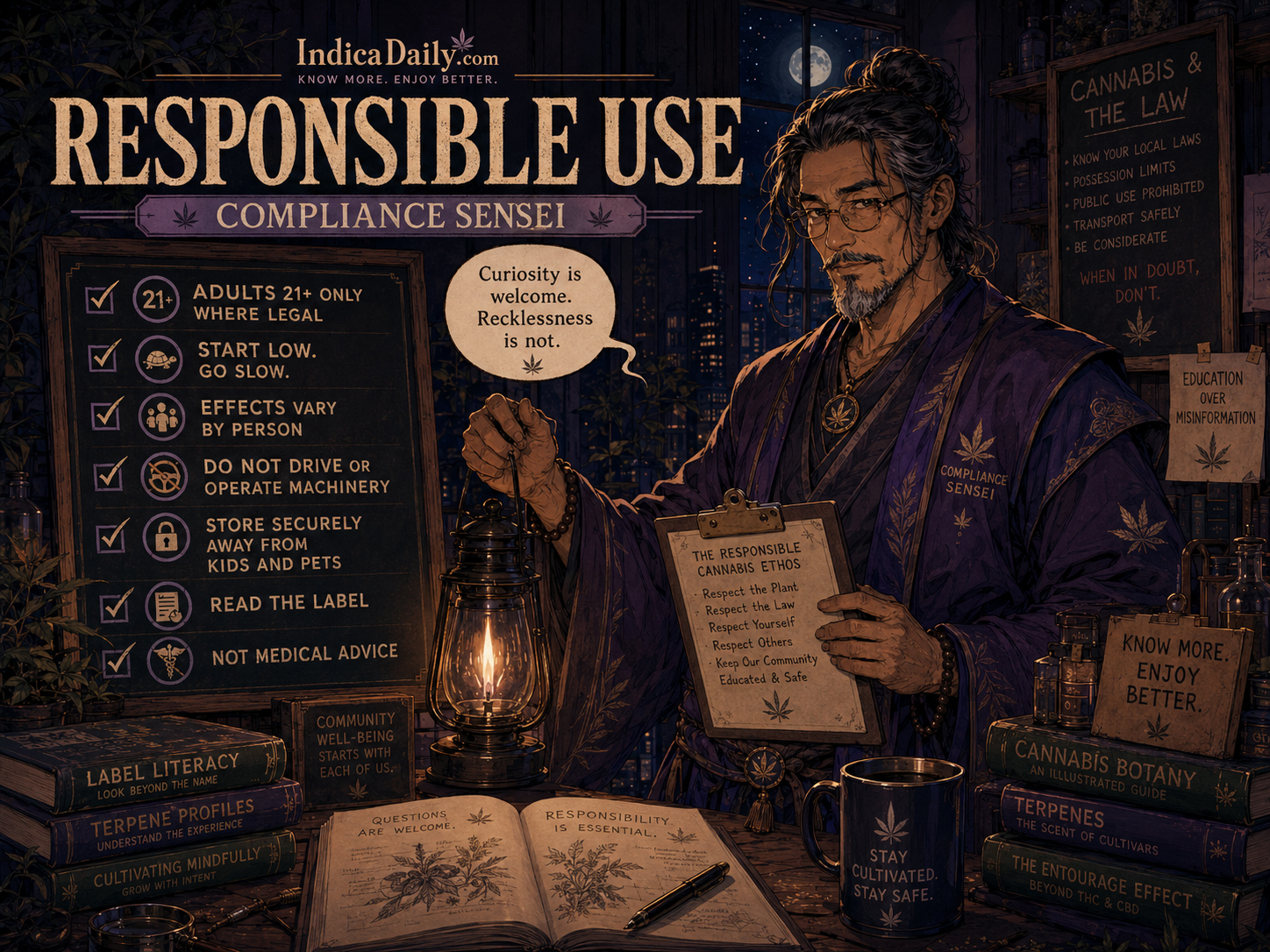
Storage and safety basics
Indica flower is still an adult-use cannabis product where legal. Treat it as something that requires secure storage and careful handling.
- Keep cannabis products away from kids and pets.
- Follow local laws and possession rules.
- Do not drive or operate machinery after using cannabis.
- Keep products in labeled packaging when possible.
- Do not treat flower appearance as medical guidance.
The bottom line
Indica flower can be visually beautiful and culturally rich. But the responsible reader looks past the glamour shot. The flower is the plant. The label is the map. Your own response is not guaranteed by either.
Look closer. Read deeper. Do not let Label Goblin grade the bud by vibes alone.